TOP SECRETS OF TIRUMALA TIRUPATI VENKATESWARA SWAMY TEMPLE
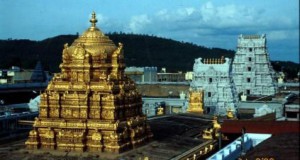
Tirumala Venkateswara Temple is a famous Hindu Temple of Lord Venkateswara located in the hill town Tirumala of Andhra Pradesh. This temple is reputed as the most ancient temple in India. The temple is built on the Venkatadri hill, one of the seven hills of Tirumala, and hence is also known as the Temple of Seven Hills. Venkatachalapathy or Srinivasa or Balaji, is the supreme God believed to be a form of the Hindu Deity Lord Vishnu.
1. ALIPIRI MANDAPAM OF TIRUMALA

ALIPIRI MANDAPAM OF TIRUMALA
2. BOMMALA GOPURAM

3. LORD KRISHNA IDOL FROM TIRUMALA

LORD KRISHNA IDOL FROM TIRUMALA
4. PADMAVATHI AMMA NIDHI

PADMAVATHI AMMA NIDHI
5. PRATHIMA MANDAPAM

PRATHIMA MANDAPAM
6. MAHADEVA GOPURAM

7. KING KRISHNADEVARAYA IDOL WITH HIS QUEENS

8. VIEW OF HILL FROM TIRUPATI

9. LORD HANUMAN TEMPLE IN TIRUMALA TEMPLE

LORD HANUMAN TEMPLE IN TIRUMALA TEMPLE
10. A TEMPLE STREET OF TIRUPATI

11. LORD VENKATESHWARA’S DWARAM

LORD VENKATESHWARA’S DWARAM
12. PUSHKARINI OF SWAMI

PUSHKARINI OF SWAMI
13. STEPS WAY TO TIRUMALA

STEPS WAY TO TIRUMALA
14. KAPILA TEERTHAM WATERFALLS AT TIRUPATI

KAPILA TEERTHAM WATERFALLS AT TIRUPATI
15. SRI VARI RAJA GOPURAM

SRI VARI RAJA GOPURAM
16. GHAT ROAD AS IT WAS BUILT WITH BASIC ENGINEERING

GHAT ROAD AS IT WAS BUILT WITH BASIC ENGINEERING
17. SRI VENKATESHWARA’S RATHAM

SRI VENKATESHWARA’S RATHAM
18. GARBHA GUDI OF TIRUMALA TEMPLE

GARBHA GUDI OF TIRUMALA TEMPLE
19. SRI VENKATESWARA SWAMY UTSAVA STATUES

SRI VENKATESWARA SWAMY UTSAVA STATUES
20. THE LORD VENKATESHWARA SWAMI HIMSELF.! NAMO VENKATESHA.!

THE LORD VENKATESHWARA SWAMI HIMSELF.! NAMO VENKATESHA.!
7 hidden secrets about Tirupathi temple that are pretty hard to believe.
Tirupathi, a sacred place located in the Andhra Pradesh state of
India is better known for its spiritual and divine ambience.
he Lord Venkateshwara is said to be the ‘God of Kaliyuga’
and the story dates back to the centuries.
As per mythology, Venkateshwara is the incarnation of
Lord Vishnu and we all know the story behind.
Many a times, we had given a visit to Tirupathi,
but still we are unaware of the hidden secrets about Tirupathi temple.
Come, let’s explore today.
India is better known for its spiritual and divine ambience.
he Lord Venkateshwara is said to be the ‘God of Kaliyuga’
and the story dates back to the centuries.
As per mythology, Venkateshwara is the incarnation of
Lord Vishnu and we all know the story behind.
Many a times, we had given a visit to Tirupathi,
but still we are unaware of the hidden secrets about Tirupathi temple.
Come, let’s explore today.
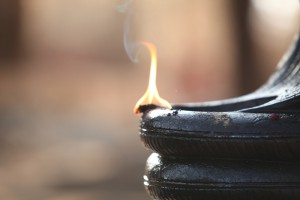
1. It is said that the Deepa or lights that are glowing in front of Venkateshwara Diety are lit some thousand years ago.
2. The temple was closed for 12 years in the 1800s as one king punished 12 people and hanged them on the walls of the temple.
3. One can hear the sound of an ocean at the back of Lord Venkateshwara. It will be wet always even when tried to dry it for thousand times.
4. The flowers used for Puja in the GarbhaGudi are thrown in the waterfall which is behind the deity. They are not supposed to bring out of the Sanctum.
5. Actually Swamy Deity is at the right corner of the Garbhagudi but it appears to be at the centre. Next time when you visit, just observe.
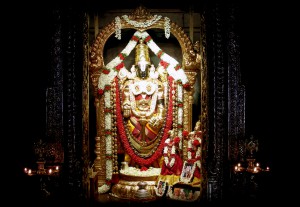
6. It is said that there is a real hair on the main idol of Lord Venkateshwara and it never tangles.
7. All the puja items for Lord Venkateshwara are brought from a village which is located at the distance of 22 km from Tirumala. It is said that women in this village have a tradition of not wearing the blouse.
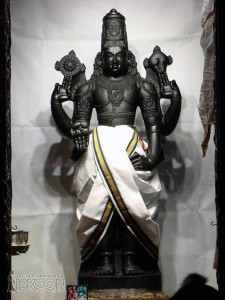
Sri Venkateswara Swamy Temple or Tirupati Balaji temple situated in the hill town of Tirumala in Andhra Pradesh is an ancient and one of the richest shrines of India. The Tirumala hill shrine consists of seven hills namely Seshadri, Neeladri, Garudadri, Anjanadri, Vrishabhadri, Narayanadri, and Venkatadri. The main temple of Tirumala lies on the seventh hill called Venkatadri, hence the Temple is also known as “The Temple of Seven Hills”. Lord Sri Venkateswara, also known as Balaji and Govinda, is the presiding deity of this holy Tirumala Temple.

There are many beliefs associated with this temple, which are too hard to believe. Let’s take a look at what these beliefs are!
The Arch at the entrance of Tirumala Hills, which resembles the hood of a serpent is considered unique in the world. It is said that main deity in Tirumala temple is of the same height as the height of the Arch. Lord Vishnu is said to have put his first foot down at a place called Padalu, which is the highest point of Tirumala hills, Second step at the location of the arch and the next step is stated to have been placed where his idol is now worshipped in the temple at Tirumala.

At the entrance of the main door (Mahadwaram of the temple), to the right side, a stick which was used by Ananthaalvar to hit Venkateshwara Swamy is present. Ananthatalvar hit Lord Venkateshwara Swamy on the chin when Swamy was in his childhood, which oozed blood. Since then, the practice and tradition of applying sandalwood paste on Swamy’s chin came into existence.

It is said that there is real hair on the main idol of Lord Venkateshwara Swamy and they say that this hair is always silky smooth and never tangles.
When Balaji lost a small portion of hair after hit by a shepherd, Neela Devi a Gandharva princess cut a portion of her hair and implant it on his scalp. Lord Balaji promises her that all his devotees who come to his abode should render their hair to him, and she would be the recipient of all the hair received.
 A Chemical kaccha Karpooram (Green Camphor), a soft white chemical is applied on the idol of Balaji every day. The fact is that, if this chemical is applied on a granite stone, cracks will appear on it. But surprisingly, even this is applied on Balaji every day; there is no damage to the stone.
There is a secret village, approximately 23 Kms from the temple in Tirumala, where no one is allowed except the residents of the village. The people are said to be living with strict practices and tradition. It is from this village, that all the flowers, milk, ghee, butter are sourced for the God.

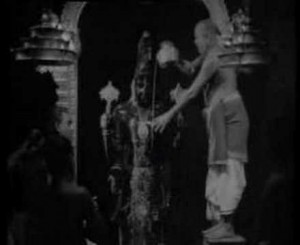
When someone dies how one does not see behind and lights the fire, similarly, the flowers removed from Swamy are thrown in the water fall at the back of Swamy. It is said that the pujaris do not look at the back of the Swamy that entire day. All these flowers can be seen floating at a place called Verpedu (located on the way to kalahasti) which is 20 km from Tirupati.
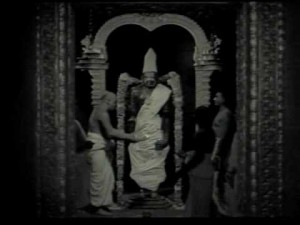
Lord Venkateshwara statue appears to be standing at the center of the Garba Gudi. But, actually, Swamy stands at the right side corner of the Garba Gudi. This can be noticed from standing outside.
 No matter how many times, the back of Swamy is dried, it always remains wet. If you carefully keep your ear and listen against Swamy’s back, sound of an ocean is heard.
The oil lamps lighted in front of the Swamy idol are said to be lit since thousands of years. It is also said that they never ever put off and no one exactly knows since when these lights are lit.

During 1800’s, the temple was said to be closed for 12 years. One King of that time is said to have punished 12 people by killing them and hanging them on the walls of the temple for doing the unsacred thing at the temple. They say that it was at this time that Vimana Venkateshwara Swamy has come to existence.
 It is said that the idol of Balaji always maintains a temperature of 110 degrees F. But the temple is at a height of about 3000 feet so the climate is normally cold.
It is also said that every morning at 4: 30 am after the Abhishekam is done with water, milk as well as other dravayam, sweat appears in the orm of fine water particles on the body of the idol, which is wiped off with a silk cloth. On every Thursday when ornaments are removed before sacred bath it is noticed that they are warm.

There is also a traditional belief in vogue that Balaji has a third eye which he opens at the time of Abhishekam.
The ever-famous 300-year old “Tirupati Laddu” has a global patent, folks!

The Local National Park is home to some rare birds and animals, and has won accolades from several bio reserves

It has the second largest zoo in Asia.

Sri Tallapaka Annamacharya (Andhra Pada Kavita Pitamaha) is said to have sung many songs in praise of this holy town.

He compared it to be divine; including the rocks, streams, trees, animals, and added that it is heaven on earth
Out of this amount, Rs. 1,000 crore is expected in offerings (also called hundi) by the devotees of Lord Balaji. The offerings range from cash, jewellery, gems, property deeds, demat share transfers and bullions of gold, silver and other precious metal
- While gold alone is estimated to add up to one tonne a year in offerings, silver, diamond and other items also flow into the temple trust's exchequer.
- In the case of property deeds, due procedure is followed by the concerned department to transfer the title.
- Revenues from the sale of tickets, prasadam and others add another Rs. 600 crore
- The proceeds from auctioning of the hair tonsured my men and women as a form of bidding to their beloved deity attracts another Rs. 140 crore. The Times of India reported TTD as saying that human hair auctioning in April earned the temple Rs.5.71 crore.
- The trust's interest receipts amount to Rs. 800 crore, noted IANS, highlighting that the temple's biggest outgo is Rs. 500 crore a year -- mostly in terms of wages and salaries.
- The temple trust said in April that it had deposited 1,311 kg of gold with Punjab National Bank under India's Gold Monetisation Scheme. The deposit apparently is under a three-year short-term programme that earns the trust an annual interest of 1.75 percent.
- Tirupathi laddu has a GI Patent making it arguably the first offering at a place of worship anywhere in the world to be recognized as an intellectual property (IP)—in this case, of the Tirumala Tirupati Devasthanams (TTD), a trust that manages the temple at Tirupati. The GI status is granted to identify a product as having a specific provenance, and with a certain quality or reputation associated with that origin. Kashmir pashmina, Darjeeling tea and Kancheepuram silk have all been granted GIs.
- The laddu, made from flour, sugar, ghee(clarified butter), oil, cardamom and dry fruits is sought after by those visiting the temple located in the Chittoor district of Andhra Pradesh. Archakas, or hereditary priests, in the temple’s kitchen called “poku”prepare around 50 million laddus every year for around 25 million visitors to the temple. TTD distributes one laddu to each visitor free of charge and as a privilege to pilgrims, two laddus are given at a further subsidized rate of Rs 10 each. The price of a 300-gram laddu is Rs 25.
- After the morning Thomala Seva or (Abhishekam (on Fridays), the accounts of the previous day is closed and submitted to the lord. This ritual is called Koluvu and is also called Durbar. Koluvu Srinivasa is brought to the Tirumamani mantapam (inside the sanctum sanctorum) and seated on a silver-plated chair with a canopy of gilt umbrella presented by the Maharajah of Mysore. This ritual is conducted in Ekantam, and only the priests and TTD officials are present. The following rituals are held:
- Mixture of fried gingelly seeds and jaggery is offered to the Lord.
- Texts from the Vedas, Vishnu Suktam and Tamil Divya Prabandhams are read.
- Then the Lord is requested to listen to the Panchangam (almanac) when the priest says, "PanchAngam AgamyatAm". Panchangam (day's calendar) is read to the Lord with the activities that will be undertaken for the day as well as activities of the next day. Details of festivals and observances in the Tirumala temple and those at the temples of Govindaraja Swami and Kodandarama Swami at Tirupati, Padmavathi Devi at Tiruchanur, Sri Kalahastiswara at Sri Kalahasti and several other nearby temples are read out.
- A TTD official then reads out the previous day's hundi collection details with the date, morning collection, afternoon collection and the loose change that was collected. These details do not include donations, Arjitham and other sources of income. At the end, it is declared that the total amount has been credited to Srivari's Bhandaram.
- Matradana: The archakas (priests) who recited the slokas and Prabandhams are awarded rice, ginger and rations.
- In 1800, the temple was said to be closed for 12 years. One King is said to have punished.
- people (who committed some crime) by killing them and hanging them on the walls of the temple. They say that, it was at this time that Vimana Venkateshwara Swamy appeared..!
The Arch at the entrance ofTirumala Hills is unique in the world.
- At the entrance of the temple, you'll see a crowbar of Ananthazhwan, which was thrown on the Lord(who came as a boy) and caused the injury on His chin.
Who doesn’t know this city in Chittoor District, Andhra Pradesh? Celebrities like Amitabh Bachchan and the likes have visited the temple often.
So, what is it that makes this pilgrimage site so special? Let’s see.
1. The Tirumala ranges show the face of Lord Balaji.
Natural Arch in the Tirumala Hills is a distinctive geological wonder located 1 km (0.6 mi) North of the temple, near the Chakra Teertham. The Arch is also called Silathoranam in Telugu (“Sila” means ‘rock’ and “thoranam” means a garland strung over a threshold, connecting two vertical columns or an ‘arch’ as in this case). The arch measures 8 m (26.2 ft) in width and 3 m (9.8 ft) in height, and is naturally formed in the quartzites of Cudappah due to natural erosive forces.
Mysterious..Miraculous..And absolutely fantastic.
It was a dream state for all those gathered there; an unbelievably true state..The entire Temple staff,that was there that moment,knows pretty well that all the doors of the main temple,including those of the Sanctum Sanctorum,will be locked up from outside after the Ekanta Seva (Final pooja performed in the temple every night) and will only be opened,the next morning,for the Suprabhata Seva (First pooja offered to Lord Sri Venkateswara at 3 a. m everyday)…
Which means there’s no way any one can enter the main Temple,until again those doors are opened the next morning by the authorized Temple staff,for the Suprabhatha seva..
Then how is that the bells rang on their own,without anyone touching them,and if that is so who is there inside the Sanctum Sanctorum except the holy Lord Sri Venkateswara Himself..??
Several questions were raised,several doubts were discussed and several more inferences were drawn, but none of those gathered there could come out with a logical explanation…
Finally,they all came to a conclusion that some pilgrim,by mistake,was locked up inside the main temple and he must have banged those Bronze bells just to draw the attention of the temple staff.
Well…This theory seems quite logical…At least from a human point of view..But if that is the case why is that we are calling it a miracle today and where’s the need for me to write about it,now,after thirty six years of it’s occurrence.. ????
RIGHT..??
Then…What Happened..???
Why did that miracle occur.. ??..And what was its significance…???
To know that,it’s important for us to go back in time and know a few things about a series of crisis ridden incidents that took place on the Tirumala hill shrine just a few weeks prior to the occurrence of this miracle.
The holy temple town of Tirumala,in those days,was witnessing a never seen before water crisis that forced the TTD staff to impose sanctions on the daily consumption of water on the hill shrine…
As a result,the supply of water to all the employees’ quarters and also to all the pilgrim’s cottages was restricted.. However,that could only regulate the water supply to a certain extent but could not offer any solid solution..
But in spite of that,the water levels in the Gogarbham reservoir and the Alwar tank on the hill shrine were drastically receding…A few more drinking water wells that were there on the Tirumala hill shrine too were drying out (The current Papa Naasanam reservoir was still under construction those days)
Tirupati vada recipe | Whole urad dal vada | How to make tirupati vada


Ingredients -
Whole Urad Dal (Black) 1/2 cup
Pepper Powder 1/2 tsp
Salt as needed (I added 1/2 tsp)
Oil for deep frying
Whole Urad Dal (Black) 1/2 cup
Pepper Powder 1/2 tsp
Salt as needed (I added 1/2 tsp)
Oil for deep frying


👇Venkateshwara Swamy in Thirupathi Thirumala of Andhra Pradesh. This video is shot by National Geograpic channel with the permission of central government. Don't miss the darshana. It's our luck to see this video thanks to National Geograpic channel.👇
🌹🙏🌹
‘సేక్రెడ్ ఫుడ్స్ ఆఫ్ గాడ్’....
తిరుమల శ్రీవారి
ప్రధాన అర్చకుడు
శ్రీ రమణ దీక్షితులు
తిరుమల అంటే
అందరికీ లడ్డూ ప్రసాదం
గుర్తుకొస్తుంది.
ఆయా సేవలను బట్టి...
చక్కెర పొంగళి, పెరుగన్నం
ప్రసాదాలూ స్వామివారికి
సమర్పిస్తారనీ తెలుసు.
మరి...
వెంకన్నకు కమ్మని దోసెలు
పెడతారని తెలుసా?
ఘాటైన మిరియాల అన్నం
వండి వడ్డిస్తారని తెలుసా? ఇవి మాత్రమే కాదు...
ఏడుకొండల వాడికి
పూట పూటకూ
ఒక మెనూ!
ఋతువులను బట్టి
ఆహారం!
స్వామివారికి సకల
విధమైన నైవేద్యం!
అతి తక్కువ మందికి
మాత్రమే తెలిసిన
ఈ వివరాలతో శ్రీవారి
ప్రధాన అర్చకుడు
శ్రీ రమణ దీక్షితులు
‘ది సేక్రెడ్ ఫుడ్ ఆఫ్ గాడ్’
(స్వామివారి
పవిత్ర ప్రసాదాలు)
అనే పుస్తకం రాశారు.
దాని తొలిప్రతిని ఆయన ఆనాటి భారత రాష్ట్రపతి
శ్రీ ప్రణబ్ ముఖర్జీకి అందించారు.
ఏడుకొండలవాడి
దివ్య ప్రసాదాలపై
పుస్తకంలోని విశేషాలను
శ్రీ రమణ దీక్షితులు
ప్రత్యేకంగా పంచుకున్నారు.
ఆ వివరాలు మీకోసం ప్రత్యేకం...
సర్వజగద్రక్షకుడైన ఏడుకొండలవాడికి
నైవేద్యం ఎప్పుడు పెట్టాలి,
ఏమి పెట్టాలి, ఏ పదార్థాలు
ఏ కొలతలతో ఉండాలి,
ఎవరు వండాలి,
ఎలా పెట్టాలి,
ఎవరు పెట్టాలి వంటివన్నీ
ఆగమశాస్త్రంలో
స్పష్టంగా పేర్కొన్నారు.
అచ్చంగా దాని ప్రకారమే తిరుమలలో
ప్రసాదాల తయారీ,
సమర్పణ జరుగుతుంది.
ప్రసాదాల తయారీ కోసం
మామిడి, అశ్వత్థ, పలాస వృక్షాల ఎండు కొమ్మలనే ఉపయోగిస్తారు.
పాలుగారే చెట్ల కొమ్మలు, ముళ్ల చెట్లుగానీ వంటకు వినియోగించరు.
ప్రసాదం వండేవారు
వంట సమయంలోగానీ,
తర్వాతగానీ
వాసన చూడరు.
వాసన సోకకుండా ముక్కు,
నోటికీ అడ్డుగా వస్త్రం పెట్టుకుంటారు. ఇక... శ్రీవారికి సమర్పించేదాకా
బయటి వారెవరూ
దానిని చూడకూడదు.
నేవైద్యం పెట్టేది ఇలా...
ప్రసాదం సమర్పించడానికి ముందు గర్భాలయాన్ని నీళ్ళతో శుద్ధి చేస్తారు. గాయత్రీ మంత్రం జపిస్తూ
నీళ్లు చల్లుతారు.
వండిన ప్రసాదాలను
మూత పెట్టిన గంగాళాల్లో
దేవుడిముందు ఉంచుతారు.
స్వామివారికి, ప్రసాదాలు,
నైవేద్యం సమర్పించే
అర్చకుడు మాత్రమే గర్భగుడిలో ఉంటారు.
గర్భాలయం తలుపుల
మూసేస్తారు.
విష్ణుగాయత్రి మంత్రం
పఠిస్తూ అర్చకుడు
ప్రసాదాల మీద
నెయ్యి, తులసి ఆకులు
చల్లుతారు.
కుడిచేతి గ్రాసముద్రతో
ప్రసాదాన్ని తాకిన
అర్చకుడు స్వామివారి
కుడి చేతికి దానిని తాకించి,
నోటి దగ్గర తాకుతారు.
(స్వామివారికి
గోరు ముద్దలు
తినిపించడం
అన్నమాట.)
పవిత్రమంత్రాలు ఉచ్ఛరిస్తూ
అన్నసూక్తం నిర్వర్తిస్తారు.
చరాచర సృష్టికి
కర్త అయిన
స్వామివారికి నైవేద్యం
సమర్పించడం అంటే,
సృష్టిలో ఆకలితో ఉన్న
సమస్తాన్నీ...
సంతృప్తి పరచడమే.
ఈ విధంగా స్వామివారిని
వేడుకుంటూ,
ముద్ద ముద్దకీ నడుమ
ఔషధగుణాలున్న
ఆకులు కలిపిన నీటిని
సమర్పిస్తారు.
నైవేద్యం సమర్పించేంత
వరకూ ఆలయంలో
గంట మోగుతూనే
ఉంటుంది. ఇది స్వామివారికి
భోజనానికి పిలుపుగా
దీనిని భావిస్తారు.
రోజుకు మూడు పూటలా
స్వామివారికి నైవేద్యం సమర్పిస్తారు.
ఉదయం ఆరు, ఆరున్నర
గంటల మధ్య
బాలభోగం సమర్పిస్తారు.
పది, పదకొండు
గంటల మధ్య
రాజభోగం,
రాత్రి ఏడు - ఎనిమిదింటి
మధ్య శయనభోగం సమర్పిస్తారు.
తిరుమల గర్భగుడిలోని
స్వామివారి
మూల విగ్రహం ఎత్తు
9.5 అడుగులు.
దీనికి అనుగుణంగానే స్వామివారికి ఏ పూట ఎంత పరిమాణంలో ప్రసాదం సమర్పించాలో కూడా శాస్త్రంలో నిర్దేశించారు.
నైవేద్యం సమర్పించిన
తర్వాత భక్తులకు
దీనిని పంచుతారు.
ప్రత్యేక రోజులలో
ప్రత్యేక నైవేద్యాలు కూడా సమర్పిస్తారు.
ఉదయం బాలభోగం
మాత్రాన్నం, నేతి పొంగలి,
పులిహోర, దద్యోజనం,
చక్కెర పొంగలి, శకాన్నం,
రవ్వ కేసరి
మధ్యాహ్నం రాజభోగం
శుద్ధాన్నం (తెల్ల అన్నం),
పులిహోర, గూడాన్నం,
దద్యోజనం,
శీర లేక చక్కెరన్నం
రాత్రి శయనభోగం
మరీచ్యఅన్నం
(మిరియాల అన్నం)
దోసె, లడ్డు, వడ,
శాకాన్నం
(వివిధ కూరగాయలతో
కలిపి వండిన అన్నం)
అల్పాహారాలు
లడ్డు, వడ, అప్పం, దోసె
స్వామివారి మెనూ ఇదీ...
ఉదయం సుప్రభాతంతో
స్వామివారిని మేల్కొలిపిన
తర్వాత అప్పుడే తీసిన
చిక్కని వెన్న నురుగుతేలే
ఆవుపాలు సమర్పిస్తారు.
తోమాల, సహస్రనామ
అర్చన సేవల తరువాత
నువ్వులు,
సొంఠి కలిపిన బెల్లం
నైవేద్యంగా పెడుతారు.
ఆ తరువాత
బాలభోగం సమర్పిస్తారు.
దీంతో ప్రాతఃకాల
ఆరాధన పూర్తవుతుంది.
సర్వదర్శనం మొదలవుతుంది.
అష్టోత్తరశతనామ
అర్చన తర్వాత
రాజభోగం సమర్పణ
జరుగుతుంది.
మళ్లీ సర్వదర్శనం మొదలవుతుంది. సాయంకాల ఆరాధన తర్వాత గర్భాలయం
శుద్ధి చేసి...
స్వామివారిని తాజాపూలతో
అలంకరిస్తారు.
అష్టోత్తరశతనామ
అర్చన తర్వాత
శయనభోగం సమర్పిస్తారు.
అంతటితో అయిపోయినట్టు కాదు! అర్ధరాత్రి
తిరువీశం పేరుతో
బెల్లపు అన్నం
(శుద్ధాన్నం, గూడాన్నం) పెడతారు.
ఇక పవళించే సమయం దగ్గరపడుతుంది.
ఏకాంత సేవలో భాగంగా
నేతిలో వేయించిన బాదం,
జీడిపప్పులు వంటివి,
కోసిన పండ్ల ముక్కలు, వేడిపాలు స్వామివారికి సమర్పిస్తారు.
ఇదీ ‘ప్రసాదం’
బియ్యం, ధాన్యాలు,
ఆవుపాల పదార్థాలు,
ఔషధగుణాలున్న
వస్తువులు, వనస్పతులు,
లవంగాలు,యాలకులు,
తులసి,మిరియాలు...
ఇవన్నీ శ్రీవారి ప్రసాదాల
తయారీకి వినియోస్తారు.
హింసలేని ప్రపంచాన్ని కోరుకున్న మహర్షులు నిర్దేశించిన ప్రసాదాలు ఇవి! ప్రసాదం అంటే ఆకలి తీర్చే ఆహారం కాదు! పవిత్రంగా పరిమితంగా స్వీకరించవలసిన పదార్థం.
ఈ అంశాలను
భక్తజనానికి వివరించడమే
ఈ పుస్తక పరమోద్దేశం!
‘సేక్రెడ్ ఫుడ్స్ ఆఫ్ గాడ్’
పుస్తకాన్ని రాయడానికి నాకు రెండేళ్లసమయం పట్టింది.
🌼👏🌼
🐈


